
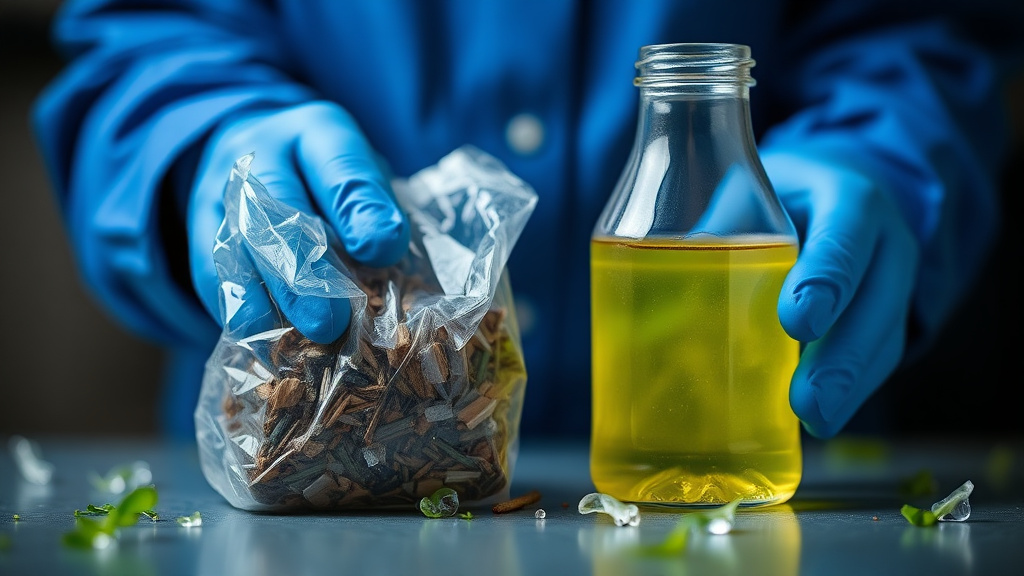
In a groundbreaking advance for sustainability, scientists have engineered a innovative plastic alternative using agricultural waste that would otherwise end up in landfills. This cutting-edge material promises to tackle the worldwide plastic problem while reshaping how we manage farming waste materials. Discover how scientists are turning crop residues into durable, biodegradable polymers that could reshape industries worldwide. Learn about the creation methodology, potential applications, and the ecological impact of this transformative technology that may finally provide a viable solution to our global plastic waste crisis.
The Issue with Traditional Plastic Materials
Traditional plastics have become an environmental crisis of massive proportions. Derived primarily from fossil fuels, conventional plastic production contributes significantly to greenhouse gas emissions and climate change. Once produced, these materials persist in our environment for centuries, breaking down into microplastics that pollute soil, bodies of water, and wildlife habitats. The worldwide plastic waste crisis has reached critical levels, with millions of tons building up in landfills and oceans annually, destroying natural environments and threatening human health through the food chain.
The financial and societal costs of plastic dependency go well past ecological harm. Current recycling infrastructure falls short, with only a small portion of manufactured plastics being properly processed, while the majority undergoes burning or waste disposal. Producing conventional plastics requires substantial energy resources and generates toxic toxic compounds. Additionally, developing nations often bear the burden of affluent nations’ plastic waste, perpetuating ecological inequality. This non-sustainable pattern calls for creative alternatives that can decrease our dependence on fossil fuel-derived plastics while tackling the growing worldwide waste problem.
Innovative Solution from Farm Byproducts
Researchers have effectively converted agricultural byproducts such as corn husks, wheat straw, and bagasse fiber into a workable plastic substitute through sophisticated chemical methods. This novel strategy reduces waste generation while producing eco-friendly materials that rival conventional plastic capabilities. The produced biopolymer exhibits exceptional strength, flexibility, and durability, making it suitable for diverse commercial applications. By transforming farm residues into valuable resources, this technology addresses two major environmental problems at the same time: decreasing landfill waste and decreasing reliance on petroleum-based plastics. This advancement represents a significant step toward circular economic practices in agriculture.
How the System Works
The process starts with gathering and processing agricultural waste materials through cleaning and drying procedures. Scientists then use specialized enzymatic and chemical treatments to decompose cellulose and lignin elements into reduced molecular units. These isolated polymers are then purified and converted into pellets designed for production. Specialized catalysts accelerate the transformation process while maintaining quality and consistency. The final biopolymer displays properties comparable to standard plastics while maintaining full biodegradability within months.
Temperature and pressure controls are vital throughout the conversion procedure, ensuring ideal molecular restructuring. Researchers utilize state-of-the-art spectroscopy and chromatography techniques to assess conversion efficiency and material composition. The technology requires minimal chemical additives, minimizing environmental contamination risks significantly. Scaling assessments indicate that the process can be scaled for commercial-scale production without compromising quality. This efficiency renders commercial viability highly feasible for agricultural regions worldwide.
- Enzyme-catalyzed hydrolysis breaks down cellulose into fermentable sugars effectively
- Catalytic agents speed up polymer chain formation and cross-linking reactions
- Temperature regulation maintains molecular integrity during processing
- Quality assurance protocols ensure uniform material characteristics and operational performance
- Waste byproducts from production are minimal with recyclable potential
Future Potential and Influence
The potential applications for this agri-waste plastic reach well outside conventional packaging. Industries ranging from automotive manufacturing to consumer electronics are investigating adoption opportunities. Preliminary estimates indicate widespread adoption could decrease worldwide plastic waste by millions of tons each year. Healthcare equipment, building materials, and textile manufacturing constitute other industries poised to benefit. As manufacturing volumes increase, production costs are projected to drop substantially, making this environmentally responsible choice economically competitive with conventional oil-based plastics in the next half-decade.
The environmental impact of bringing this technology to market should not be underestimated. By utilizing agricultural residues that currently decompose in fields or burn, emitting climate-warming gases, researchers estimate a significant decrease in greenhouse gas output. Farmers create new revenue sources from turning waste into value, boosting agricultural communities. Natural decomposition guarantees less waste in landfills and marine contamination. Governments worldwide are already considering policy structures to incentivize adoption. This major advance represents a fundamental change toward circular economy principles, demonstrating how scientific innovation can tackle at the same time dealing with waste, climate change, and growth and prosperity challenges globally.
