
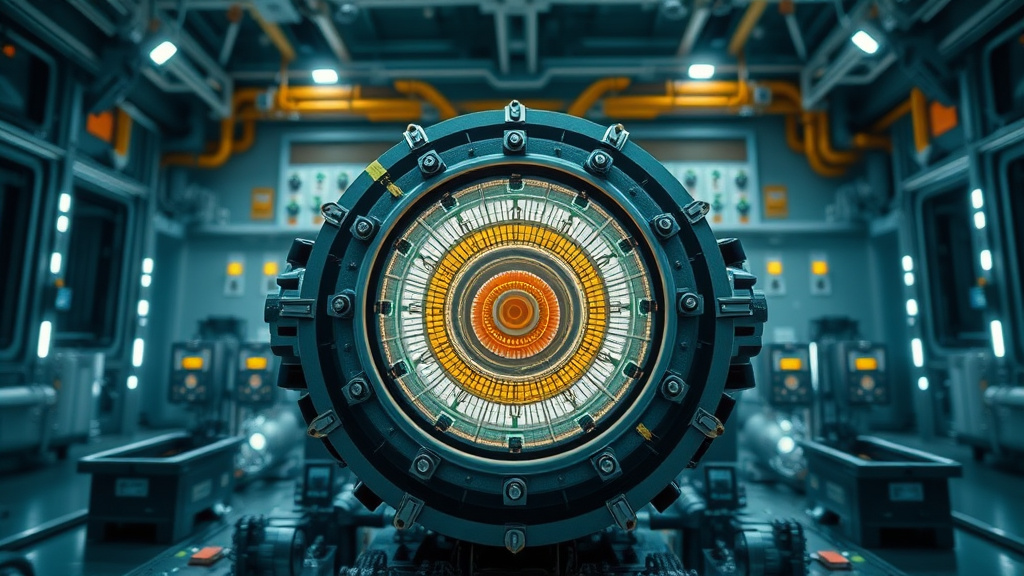
In a landmark achievement for renewable power, scientists have achieved a fusion reactor that has shattered previous energy production records, marking a critical juncture in humanity’s quest for renewable energy sources. This significant achievement represents years of research and innovation converging into a practical success that could revolutionize worldwide power generation. As the world confronts climate change and diminishing energy reserves, this fusion reactor’s outstanding results offers strong indication that clean, unlimited energy production may at last be within our grasp.
Key Development in Fusion Energy
The fusion energy reactor has successfully demonstrated unprecedented power output levels, surpassing all prior test results. This achievement represents a watershed moment in sustainable energy advancement, validating decades of scientific research and engineering innovation. The reactor’s performance metrics surpass projections, providing concrete evidence that fusion power can be harnessed reliably and efficiently for practical applications. This major advance strengthens the worldwide effort to moving beyond traditional energy sources in favor of sustainable energy sources.
Researchers and technologists worldwide have praised this achievement as a transformative step toward bringing to market fusion energy. The reactor’s success shows that the engineering obstacles once deemed impossible to overcome can be surmounted through persistent research and advanced technology. This achievement has revitalized international collaboration in fusion research, with numerous countries and private organizations expanding their fusion programs. The favorable outcomes indicate that fusion power plants could go online within the coming decades.
Grasping the Design of the Reactor
The reactor uses sophisticated magnetic containment technology to sustain plasma at ultra-high temperatures exceeding 100 million degrees Celsius. The design features advanced superconducting magnets that create powerful magnetic fields, keeping the heated plasma from touching reactor walls. Careful engineering design ensures optimal plasma stability and confinement time, critical for continuous fusion reactions. The innovative cooling systems and structural materials withstand extreme thermal and radiation stresses, allowing extended operational periods.
The reactor’s design features a advanced control system that monitors and adjusts plasma parameters dynamically. Comprehensive diagnostic tools provide detailed information about plasma behavior, allowing operators to enhance reaction conditions on an ongoing basis. The design incorporates multiple safety layers ensuring reliable operation under different scenarios. Engineers have implemented knowledge acquired from previous experiments, producing enhanced productivity and results. This enhanced configuration represents the culmination of comprehensive investigation and repeated design iterations.
Ecological and Economic Impact
Fusion energy production generates virtually no greenhouse gas emissions, providing a clean alternative to fossil fuels. Unlike nuclear fission reactors, fusion generates minimal radioactive waste, resolving major environmental concerns linked to traditional nuclear power. The reaction creates helium as its main end product, an inert and valuable gas. This environmental advantage establishes fusion as a critical technology for meeting global climate goals and decreasing atmospheric carbon concentrations significantly.
The economic consequences of market-ready fusion energy are significant and wide-ranging. Fusion power plants could deliver consistent power at affordable prices once fully matured and deployed. The technology has the potential to generate significant job creation in manufacturing, installation, and maintenance sectors. Plentiful renewable power would lower energy prices globally, advantaging both businesses and households. Capital deployment in fusion systems could drive economic expansion while resolving energy resilience challenges worldwide.
- Zero carbon emissions throughout power production and operation
- Lower nuclear waste versus standard nuclear fission plants
- Abundant fuel reserves available worldwide for ongoing production
- Opportunity for substantial cost savings through technological advancement and scale
- Establishes high-skilled jobs in research, manufacturing, and plant operations
Future Outlook and Worldwide Power Evolution
The significant achievement made by this fusion reactor creates innovative routes for global energy independence and environmental protection. Nations around the world are now accelerating investments in fusion energy, understanding its ability to displace traditional energy and substantially cut CO2 output. This pivotal moment demonstrates that fusion energy production is shifting away from theoretical possibility to tangible application, set to reshape electricity generation and manufacturing operations over the next several decades.
As fusion technology advances, its widespread deployment could substantially reshape global energy infrastructure and geopolitical landscapes. The prospect of plentiful, clean energy production offers solutions to energy poverty, industrial decarbonization, and environmental sustainability challenges. With ongoing research funding and global collaboration, fusion reactors may become mainstream power sources by mid-century, establishing a new era of long-term sustainability and ecological recovery for generations to come.
